There are two kinds of loss you experience volunteering at an animal shelter. The first one is the obvious one — death. As hard as it is to accept, not every animal can be saved. This is true even at the shelter where I volunteer, the Cleveland Animal Protective League, where no animal is euthanized for time or space. At the APL, the decision to euthanize is made when it is determined that an animal cannot be effectively treated or rehabilitated — most often because of an advanced health condition or extreme aggression. After seven months as a volunteer there, I cannot say I always understand or agree with these decisions, but I know they are not made lightly. I have personally known and cared for 14 cats who were later euthanized for a variety of reasons both medical and behavioral. I can name all of those cats by heart, and tell you something special about each one. I have grieved for each of them as if they were my own companions. And I still think of them all the time.
The other kind of loss, for which I was wholly unprepared, occurs when an animal you love is adopted. This is, of course, the ultimate goal — it’s what you want for every animal at the shelter, to get them out of cages and into loving homes. But there is an unavoidable side effect of spending so much time caring for animals in need — you fall in love. (I fall in love at least once every week. So far, my boyfriend doesn’t seem to be too jealous.) You choose favorites, or more typically, they choose you. The longer they stay at the shelter, the deeper your bond with them grows. You might even catch yourself hoping a particular cat won’t get adopted before your next shift, because you want to see him again. Then one day, it happens. Your favorite guy finds a home! Feelings of elation are tinged with sadness and the bittersweet realization that you’ll never see him again. It is without a doubt the greatest feeling in the world when an animal you love finds a home. But it breaks your heart just the same.
Prince was a real character. A spunky seven-year-old brown and white tabby with huge, discerning green eyes that would be fixed on you every time you walked by. Whenever I approached him, he would stare at me and let out a plaintive yowl. Usually I would greet him, and he would yowl again in response, and this conversation would continue until I opened his cage to pet him. Prince was very particular about how he liked to be petted. He really loved to be scratched around his neck. He would stand at the front of his cage to receive his neck rub, head down, almost in a meditative state. After his neck rub, I’d give him a few treats and go find him a cozy new bed. Proper cat beds are hard to come by in a shelter — most of the kitties sleep quite contentedly on folded towels and blankets, which we have in great abundance. But I find that some of the more anxious cats — Prince among them — get a great deal of comfort from having something soft and fluffy to snuggle. Prince was often restless, a bundle of nerves. After being presented with a nice soft bed or pillow, he would settle right down, kneading his paws into it, his whole body seeming to melt. Nothing made me happier than the sight of him dozing peacefully the next time I passed by his cage.
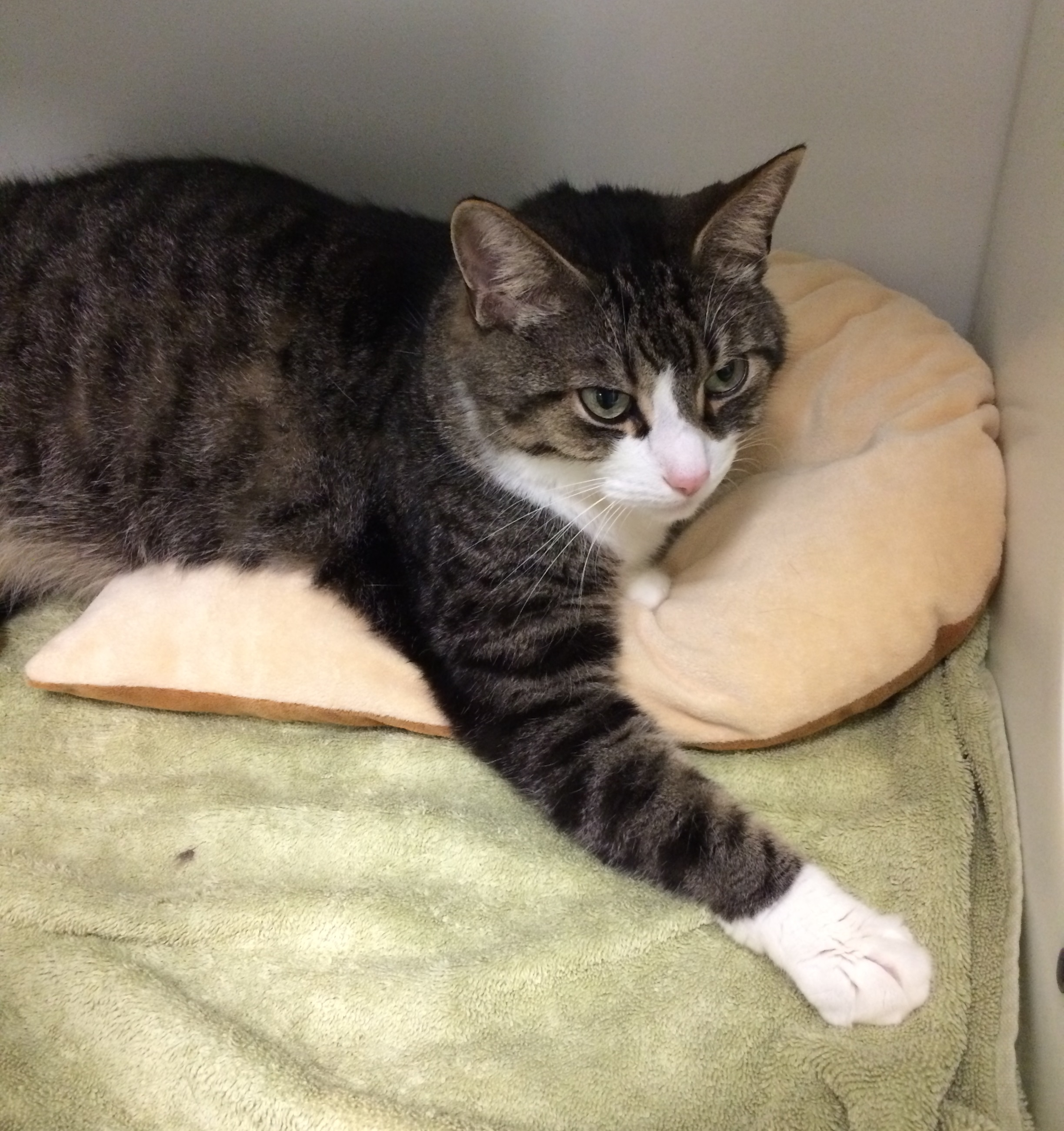
Prince settles into his new bed.
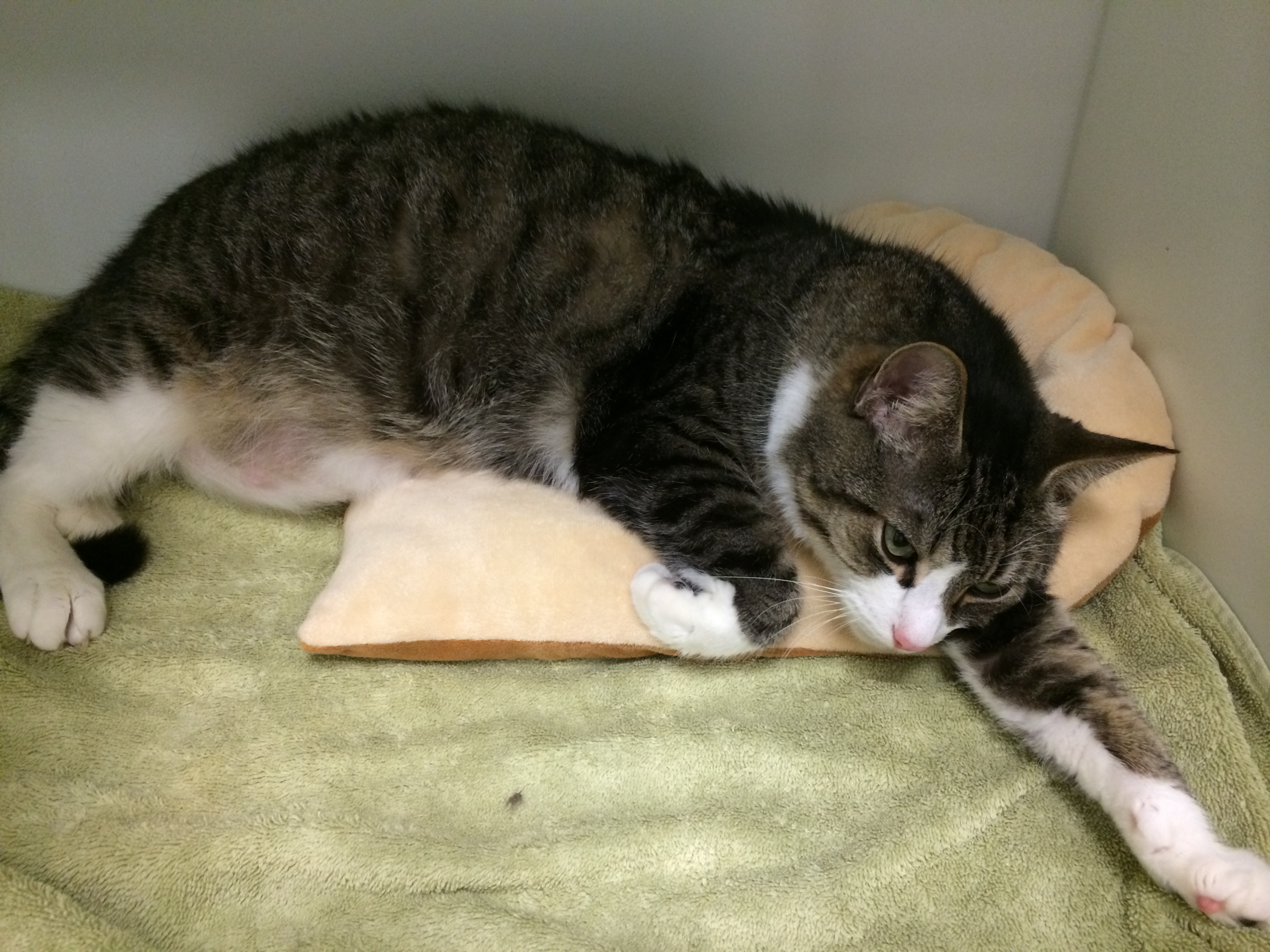
The picture of relaxation.
Tagalong was the ultimate lovebug. Ten years old and solid charcoal grey, with the tiniest patch of white on his belly. His lime green eyes were nearly always half-closed, like the contemplative face of a Buddha. You got the sense of a wise old soul in there. Tagalong, or Taggie, as I liked to call him, was by far the most vocal resident of the cat adoption room, greeting every passerby with his unmistakable meow. For me, it was love at first sight. The first time I saw him, responding to his persistent calls, I opened the door to his cage and sat down at the edge to pet him. Without a moment’s hesitation, he climbed onto my lap, already purring. As I continued petting him, he stepped around my lap in happy circles, nuzzling and head-butting me furiously. Curling up in my lap, he extended one of his front legs up around my waist, as if giving me a hug. I could have easily spent my entire four-hour shift this way. Indeed, from that day forward, cuddle time with Taggie became a requisite of my volunteer shifts. He was the most easygoing and affectionate little fellow I’d ever met. I could pick him up and hold him over my shoulder, and he’d nuzzle under my chin, purring sweetly in my ear. I could cradle him like a baby, exposing his little white spot, and he would lie back with his Buddha eyes half-closed, the picture of contentment. I was in love. And I wanted to take him home.
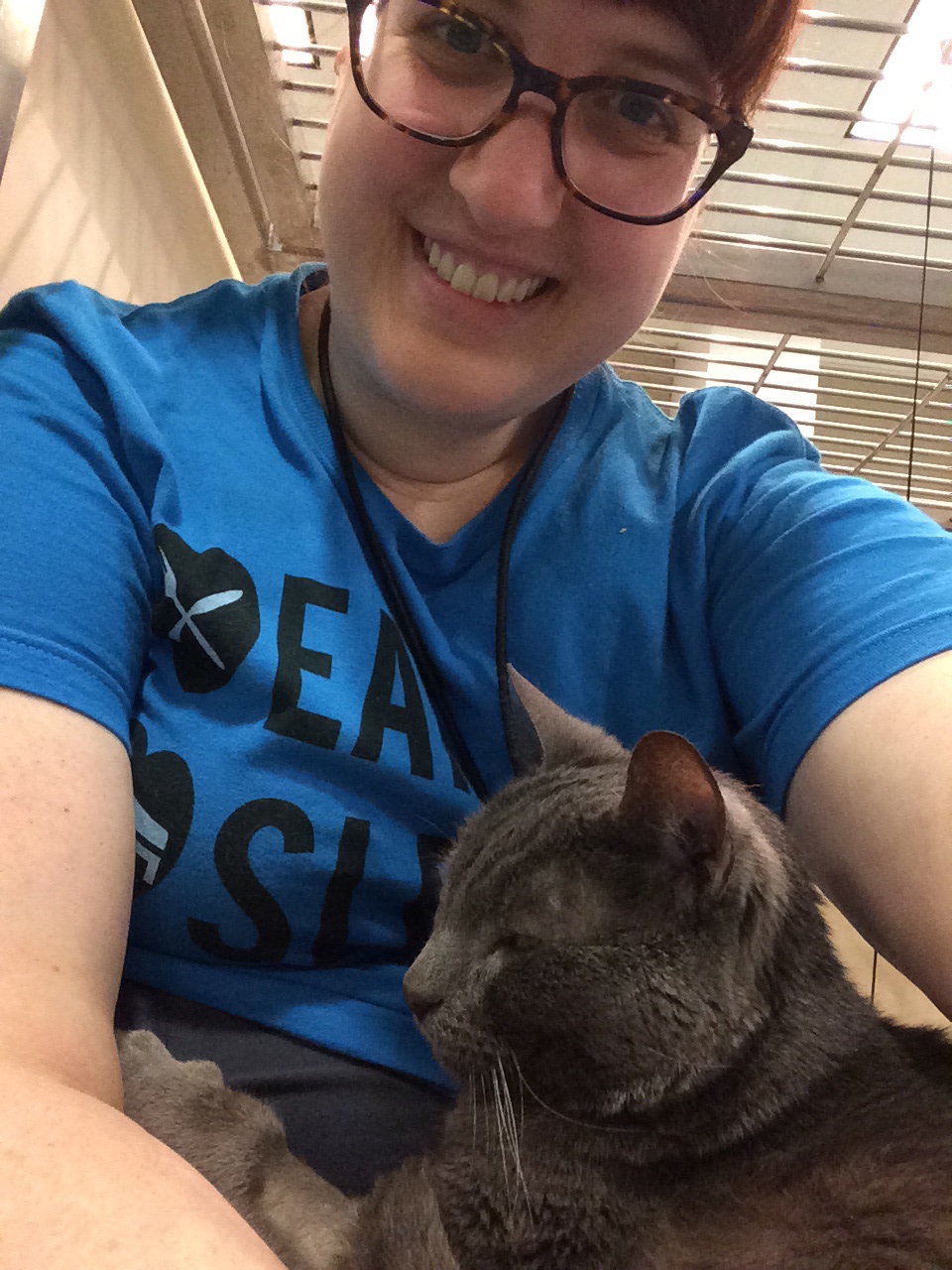
Shelter selfie with Tagalong.
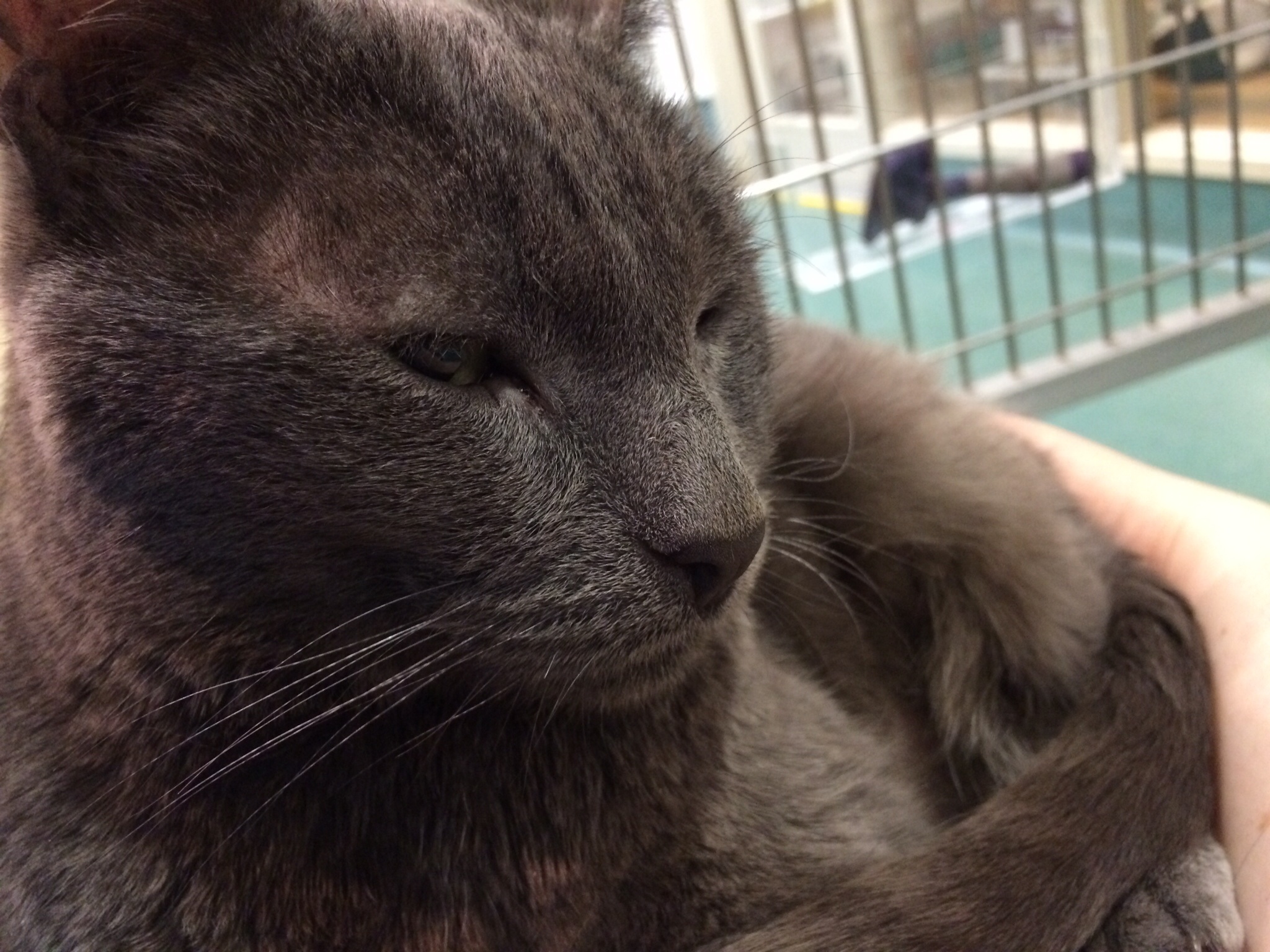
The Buddha cat.
Recently, I came in for my regular Saturday shift and was alarmed to see a red card on Prince’s cage, along with a sign marking him as “unavailable.” Upon closer inspection, I saw that the red card contained a chart for monitoring litter box behavior. Oh, no. My heart sank. Cats who did not use their litter boxes appropriately were often euthanized, because the shelter felt that these cats would be very difficult to adopt out. Before I left that day, I made sure to give Prince some extra love and neck scratches, and I gave him the softest bed I could find. And I held my breath.
A few days later, I begged my boyfriend Alan to come with me to the shelter to meet Tagalong. That is how serious I was about wanting to adopt him. Although Alan humored me, he also gently reminded me of the cat we had at home, eight-year-old Anthony, who had been an only child his whole life and didn’t seem to mind it that way. Throwing all reason and rationality out the window, I held Taggie purring in my arms and instantly transformed into the fourth-grader at the pet store with my mom in 1989, holding the kitten who would become my Callie, saying, “Please, can we take her home???” This time, however, I went home without the cat.
Later that same week, just before leaving work one day, I logged on to PetPoint, the APL animal database, to check up on some of my favorite cats. I searched for Tagalong and let out an audible gasp when I saw the word “Released” beside his name. I opened his record, and it was confirmed — my beloved Taggie had been adopted! Immediately, I started to cry, and I was extremely grateful that my office mates had already left for the day. I was filled with conflicting emotions, so happy that this wonderful cat had found a loving home, but so heartbroken as I realized how much I really had wanted him for my own. One week later, Tagalong’s adopter posted an update to the APL Facebook page. She had renamed him Lyric for his near constant vocalizing, and she gushed about how much she loved him. It was clear he had found a good home with someone who would take great care of him. I couldn’t ask for anything better than that.
The night I learned that Tagalong had been adopted, I checked PetPoint one more time. I had counted 5 days from the start of Prince’s litter box monitoring, and I was worried. I searched for his name, my stomach in knots, and tears sprang to my eyes when I saw the word I had been dreading for days. “Deceased.” Prince had been euthanized. The grief hit me like a brick wall. And to be perfectly honest, I was outraged. Prince was a good cat, and I was sure, a victim of his circumstances. Many of the cats at the shelter cope extraordinarily well with such a stressful environment, but for some, it is all too much. Unable to sleep that night, I stayed up writing the first draft of this blog post in an attempt to honor Prince’s life and memory, and to cope with my swirling emotions around his death. At the shelter the following Saturday, the sight of a different cat in his cage was one more punch to my gut, making the fact of his death undeniable. As I spoke with some of the animal care techs, I learned that I was not alone in my frustration and sadness, which offered me some small comfort. Unable to change the past, though I can’t help wondering what I could have done, I can only hope that Prince knew how much he was loved. I won’t ever forget him.
Cats come and go from the shelter at an unpredictable pace. Some stay with us for a matter of days; others stay for weeks or even months. Most go on to their “furever” homes with new families who adore them. Others are less fortunate. My goal is to give all of these cats the love and care they deserve, for however long they are there. It can be the simplest things — fresh water, a clean bed, a new toy, a neck rub or snuggle — but I want to believe that these small things make a big difference. I want to believe that it is better to have loved and lost, not only for me, but for them. Especially for them.
Rest in peace, sweet Prince.
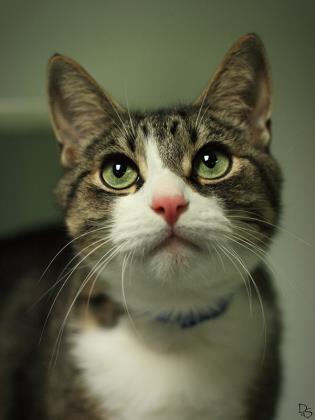
Photo by Dan Sandy.
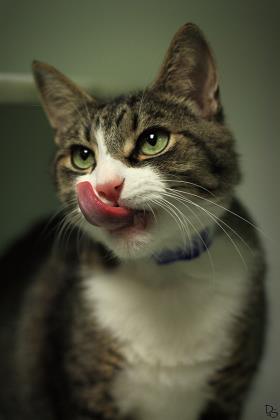
Photo by Dan Sandy.
 Green Monkey
The best way to honor Prince is by bringing attention to this. I foster & tame down several ferals each year & find them a home. It’s hard but also feels good to know they will be cared for. Litterbox behavior can be hormones or stress & the story of Prince, so well written, makes me sad too. I have 3 cats & 2 would likely be euthanized in most shelters. Timmy is incredibly sweet but has neurological damage that makes him wobbly & sometimes he lays down to pee so needs a high walled box. Elia is a sweet but unpredictably cranky kitty when feeling insecure. Here there are several rescues that specialize in harder to place cats & our county shelter spearheaded a coalition of rescues. Sadly even they can’t save everyone.
My heart bleeds for you, but the greater message is that you make a huge difference in quality of life & save many more cats.
Thank you so much for your kind words, and thank you especially for the wonderful thing you do in fostering those feral cats! Special-needs animals occupy a precious place in my heart for sure, and I hope I can continue to find more ways of helping them. Give some snuggles to Timmy and Elia for me! 🙂